
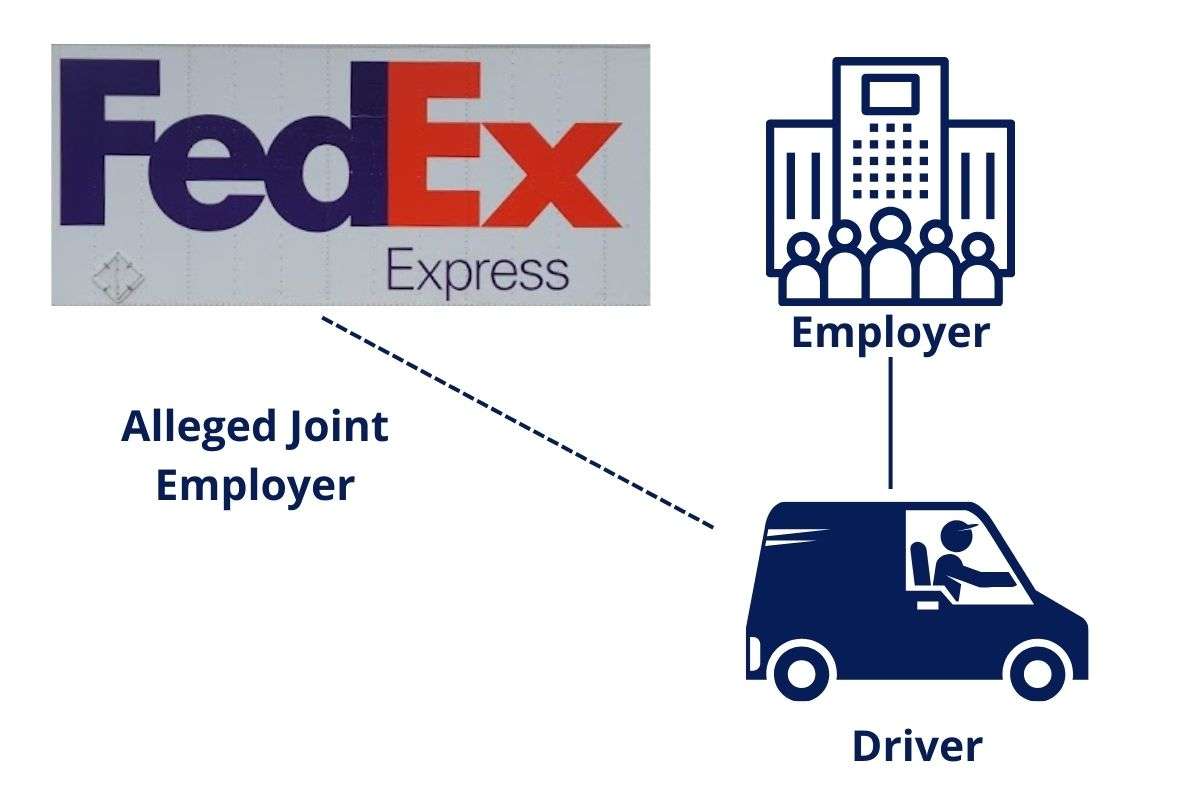
From JDSupra, Richard Reibstein discusses a recent decision in which the court dismissed a claim by Fedex drivers that Fedex was a joint employer and liable for damages relating to the misclassification of drivers. Richard writes:
Class action lawyers alleging IC misclassification have filed multiple Fair Labor Standards Act (FLSA) lawsuits against FedEx’s Ground and Home divisions. The core issues that plaintiffs in those cases asserted centered on the contention that driver/owners making deliveries on a single route were not ICs but rather employees misclassified as ICs. FedEx changed its business model a number of years ago when it launched its Independent Service Provider (ISP) program, where it no longer contracts with ICs that own and operate single routes. Instead, it contracts only with ICs operating companies with multiple routes. Driver/owners that become ISPs then hire a number of employee drivers and helpers to assist them in operating the routes. This tends to undermine any claims that ISP owners were themselves misclassified and should be deemed FedEx employees. As a result, plaintiffs’ class action lawyers tried to advance a new argument: that the ISPs and FedEx were joint employers of all the drivers and helpers working for an ISP on its multiple routes. That argument was soundly rejected last month by a Massachusetts federal district court, which granted FedEx’s motion to dismiss. While there is some overlap between the test for IC status and the test for joint employer status, there are key differences, and FedEx successfully demonstrated to the court that the plaintiff in the Massachusetts case had not sufficiently alleged that FedEx was an employer of the drivers. While this favorable result for FedEx may signal an end to FLSA IC misclassification lawsuits, prudent companies that seek to restructure and implement ISP arrangements can use a process such as IC Diagnostics (TM) to minimize exposure to both IC misclassification and joint employer claims.
In the Courts (4 cases)
FEDEX SUCCEEDS IN DISMISSING JOINT EMPLOYER CLASS ACTION BY DRIVERS. A Massachusetts federal district court has granted FedEx’s motion to dismiss claims by drivers under the FLSA that FedEx is a joint employer along with ISPs that own and operate multiple routes. The drivers alleged that both FedEx and the ISPs violated the FLSA by failing to pay them overtime pay for hours worked in excess of 40 hours a week. Following the dismissal of two prior FLSA collective actions, 183 drivers filed two separate actions (consolidated for pretrial proceedings) against FedEx, which filed a motion to dismiss. In its motion, FedEx argued that the allegations by the drivers failed to sufficiently allege the existence of an employment relationship between the drivers and FedEx under the joint employment standard applied under the FLSA by the U.S. Court of Appeals for the First Circuit. The court agreed with FedEx, concluding that the drivers’ complaint allegations did not support an inference that FedEx had the power to hire or fire the drivers, determine the drivers’ rate of pay and method of payment, or maintain their employment records — three of the four factors examined by the First Circuit in determining if a company is an employer under the FLSA. The district court concluded that, on balance, the drivers failed to create a plausible inference that FedEx was the drivers’ joint employer. Although not required to proceed further, the court also addressed the remaining elements of the drivers’ FLSA claims “for the sake of completeness.” The court held that the drivers also failed to sufficiently allege unpaid overtime and actual or constructive knowledge by FedEx that the drivers worked overtime and were not compensated properly. An appeal by the plaintiffs is anticipated, unless they try to amend their complaint to address the inadequacies found by the court. Doyle v. Federal Express Corp., No. 24 -cv-12030 (D. Mass. Jan. 26, 2026), and Aleyne v. Federal Express Corp., No. 24 -cv-12031 (D. Mass. Jan. 26, 2026).


